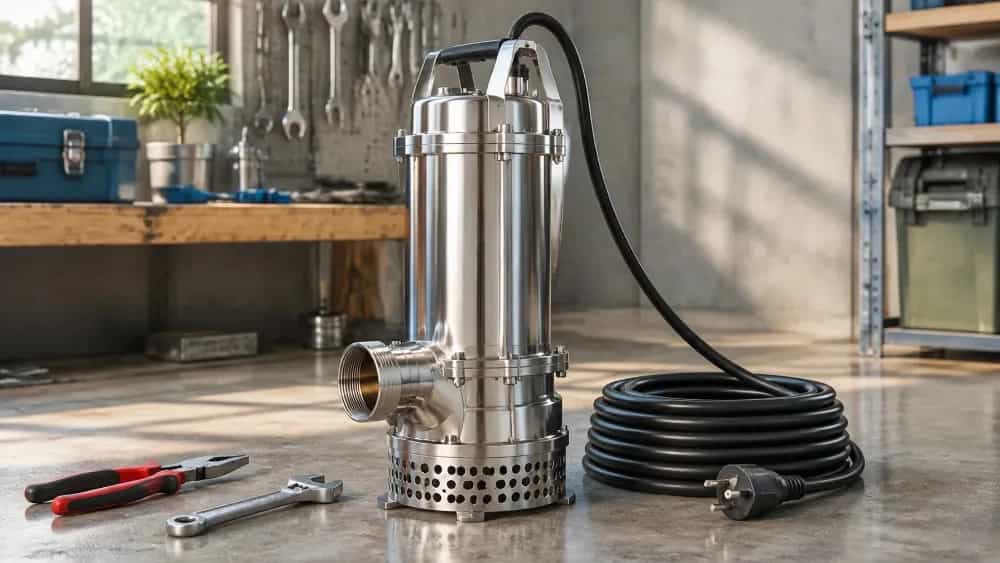
When the well water does not reach the surface or its pressure is not enough for irrigation, choosing a submersible pump can be the solution; But choosing an inappropriate model increases the cost of electricity and repairs. To make the right purchase, you must first determine the depth and water level of the well, the required flow rate and the available electricity. Then measure the single-phase or three-phase model according to the project conditions. Iran Pump Taherlo provides the possibility to check and inquire about the competitive price of single-phase and three-phase submersible pumps.
How to choose the right submersible pump?
A suitable submersible pump should be able to deliver water with the required flow rate from the depth of the well to the consumption point. To make the right choice, check the installation depth, total head, required flow rate, well diameter and type of electricity together.
The floating pump consists of a pump and an electric motor that are placed in the water when working. This pump directs water from the well or tank to the surface of the ground and the consumption network. Due to installation in water, this device is suitable for deep wells; Where ground suction pumps usually cannot lift water effectively.
Before buying, prepare this information:
- Water level when the pump is working: The water level when the pump is working may go below the fixed stagnation level.
- Water transfer height: Determine the vertical distance from the water level to the highest discharge point.
- Required flow rate: Determine the amount of water required in liters per minute or cubic meters per hour.
- Diameter of the well wall pipe: Diameter of the pump It should be compatible with the interior of the well.
- Type of electricity available: Specify whether you have single-phase or three-phase electricity.
- Water quality: The presence of sand, sand or salts can affect the choice of material and structure of the pump.
What is the difference between single-phase and three-phase submersible pumps?
The single-phase submersible pump runs on regular household electricity and is a common choice for lighter applications. The three-phase pump is chosen for projects with higher flow or power and heavier duty, provided that three-phase electricity is available.
What applications is a single-phase submersible pump suitable for?
The single-phase submersible pump is usually used for villas, small buildings, small gardens and wells with limited water needs. Easier access to single-phase power makes installation simple for many consumers; However, the capacity of each model should be measured from the performance curve and technical specifications of the same device.
Don't assume this model is cheaper or more suitable just because it is single phase. If the pump has to raise water from a great depth or work for long hours at a high flow rate, an inappropriate selection can lead to an increase in flow consumption, loss of performance or strain on the motor.
When is a three-phase submersible pump a better choice?
The three-phase submersible pump is usually used for agricultural wells, large complexes and industrial projects. These models, if chosen correctly, can cover higher flow and power requirements, but their installation requires three-phase electricity and appropriate protective equipment.
To choose between single-phase and three-phase, do not pay attention only to the depth of the well. The required flow rate, water transfer height, daily working hours, cable length and power supply conditions also have an effect on the decision.
Comparison criteria | Single-phase submersible pump | Three-phase submersible pump |
Type Electricity | Single-phase electricity | Three-phase electricity |
Common use | Villa, small garden and utilities limited | agriculture, industrial and high-yielding uses |
choice of power | commensurate with the required flow rate and head | commensurate with Flow rate, head and continuous working conditions |
starting equipment | suitable to the specifications of the motor and pump model | panel and protection equipment suitable for three-phase electricity |
Important point of purchase | Check the power to respond to real consumption | Check electricity access and installation cost |
What factors determine the price of a submersible pump?
The price of the floating pump depends on the technical specifications, brand, type of parts and accessories. To compare prices, put together models that have similar flow and head; Comparing only price or nominal power can be misleading.
The most important factors affecting the price are:
- Head and flow rate: A pump that moves water to a higher height or with a higher flow rate may need different motor and pumping classes.
- Power and type of motor: The power of the motor must be compatible with the required working point.
- Material of the body and impeller: Match the material of the parts with the water quality and operating conditions.
- Diameter and design Pump: Different models are designed for different well diameters.
- Brand and after-sales service: Availability of parts and services affects long-term maintenance cost.
- Accessories: Cable, switchboard, check valve and protection equipment may be calculated separately.
When inquiring about the price, ask for the exact model, electrical specifications, head and flow and check what items are included in the declared price. This will help you compare seemingly similar prices more accurately.
Practical tips for installing and maintaining a submersible pump
Correct installation and selection of appropriate protective equipment reduce the risk of failure of the floating pump. Before starting, check the well diameter, installation depth, cable condition and water conditions and prevent the pump from running without water.
What should we check before installation?
- Adapt the pump to the diameter of the well: Consider enough space for installing and exiting the pump.
- Determine the installation depth based on the water level: The pump should be placed in the appropriate water range and away from the muddy bottom of the well.
- Choose the right cable: Match the length and cross-section of the cable with the motor power and the distance to the pump panel.
- Strictly protect electricity Note: Protective equipment must be compatible with the type and specifications of the motor.
- Use a suitable check valve: This part helps to control the backflow of water in the pipeline.
- Avoid running the pump dry: A drop in water level can damage the motor and pump components.
What are the common errors when buying or operating?
One of the common mistakes is choosing a pump based only on the power or depth declared in the product specifications. The actual performance of the pump depends on the combination of head, flow rate, path loss and installation conditions; So you should check the model performance chart.
Other errors that increase the repair cost:
- Selecting the pump without measuring the water level during pumping
- Installing the pump too close to the bottom of the well
- Disregarding the presence of sand in the water
- Using inappropriate cable or protective equipment
- Starting the pump without checking the voltage and connections
- Keeping the pump on when the water level of the well drops sharply
summary
To buy a submersible pump, first specify the water level of the well, the total head, the required flow rate, the diameter of the well and the type of electricity; Then measure the single-phase or three-phase model based on the actual conditions of the project. Price comparison is not a reliable criterion for selection regardless of performance and accompanying equipment. To check the types of single-phase and three-phase submersible pumps at a competitive price, discuss your well and consumption specifications with the experts of Iran Pump Taherlo and match the proposed model with the actual needs of the project before purchasing.